
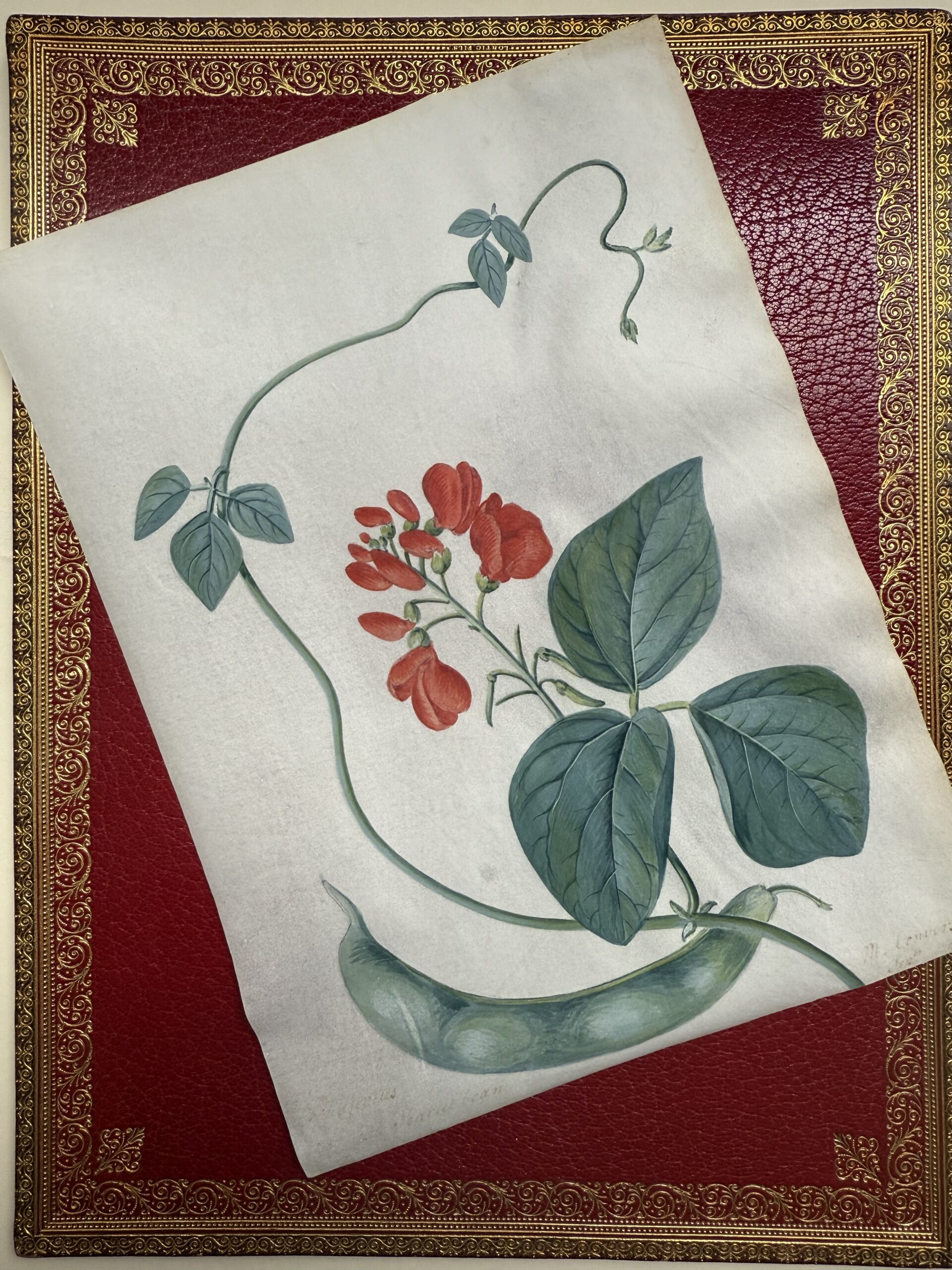
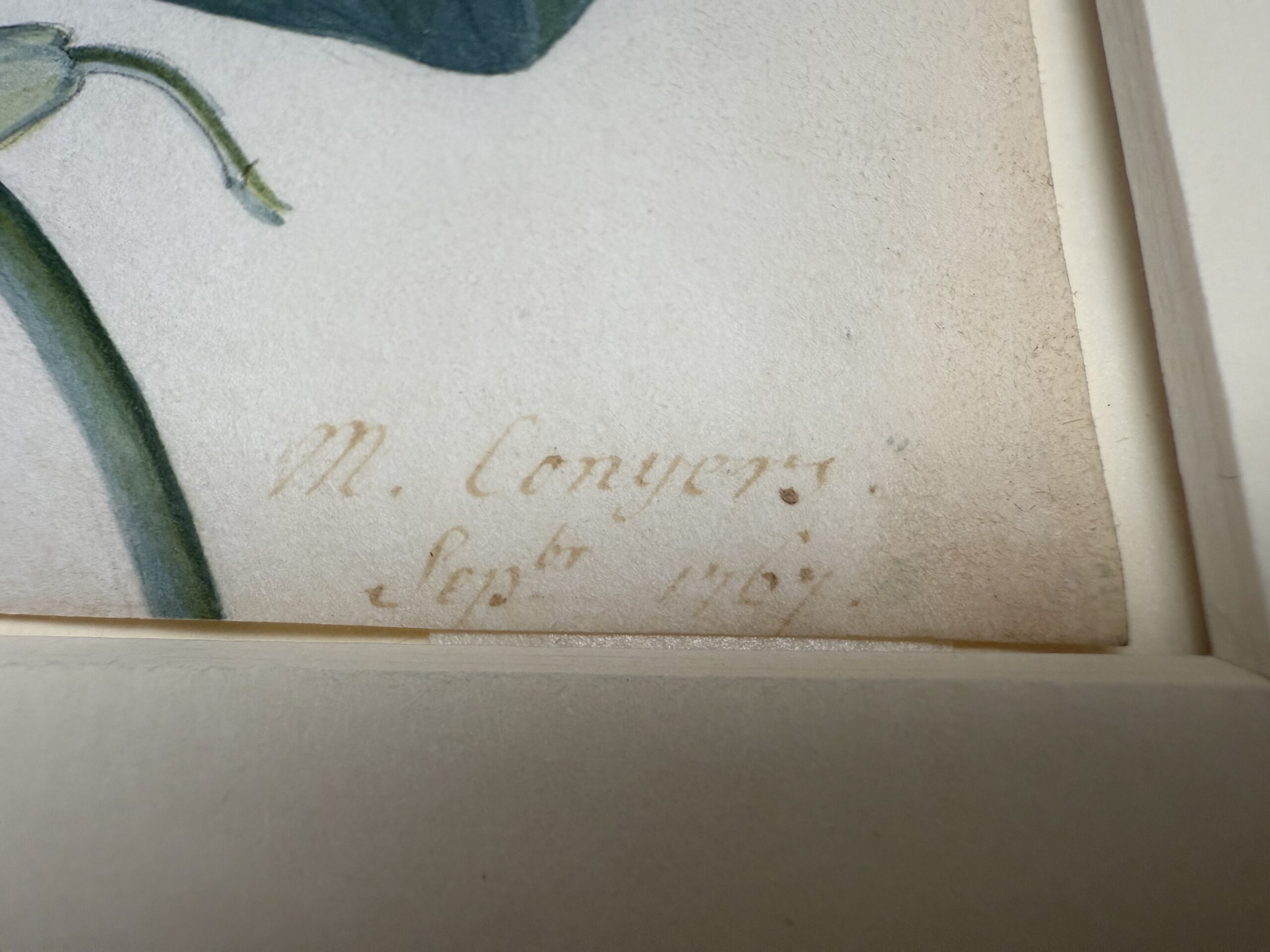
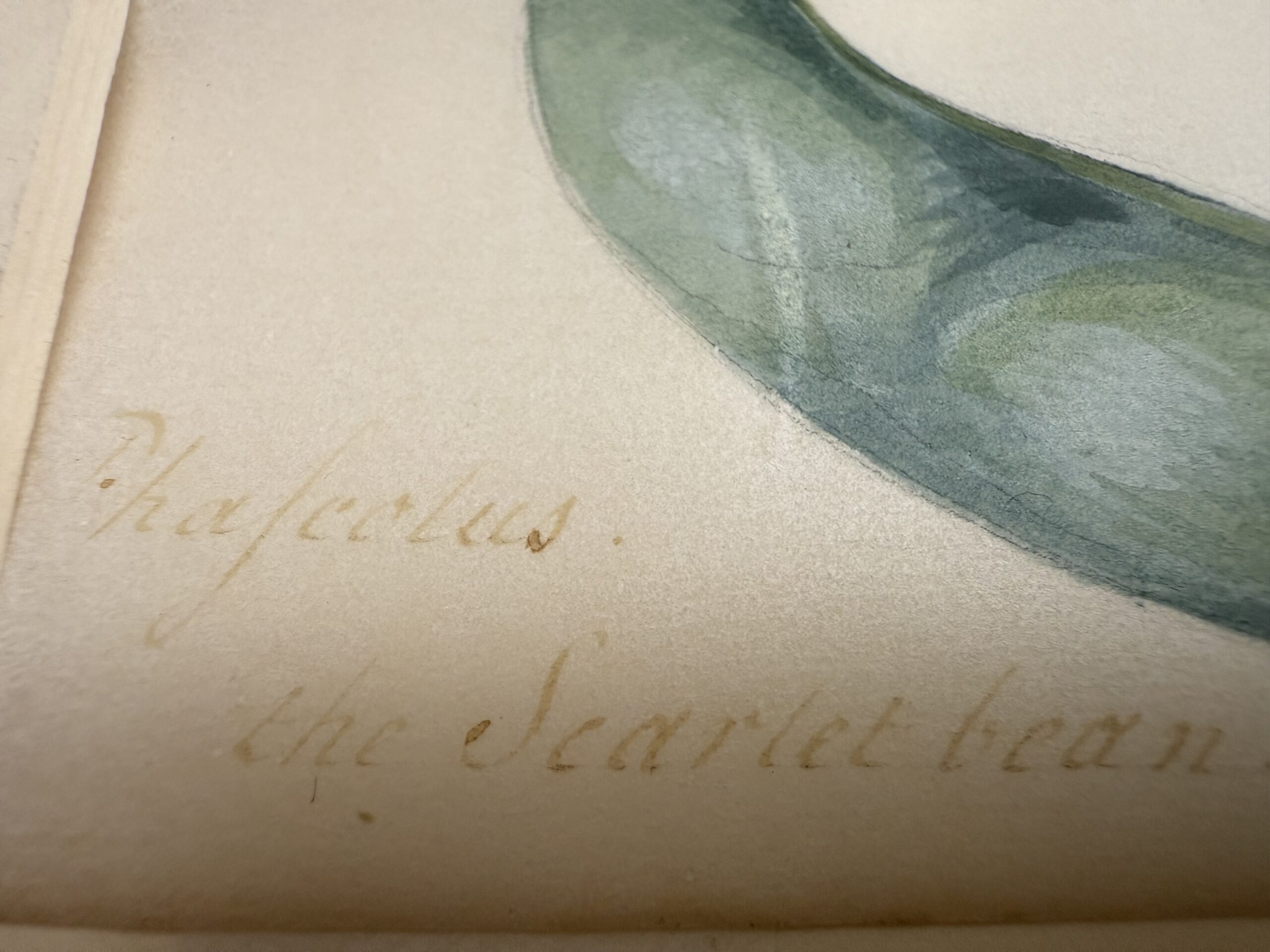
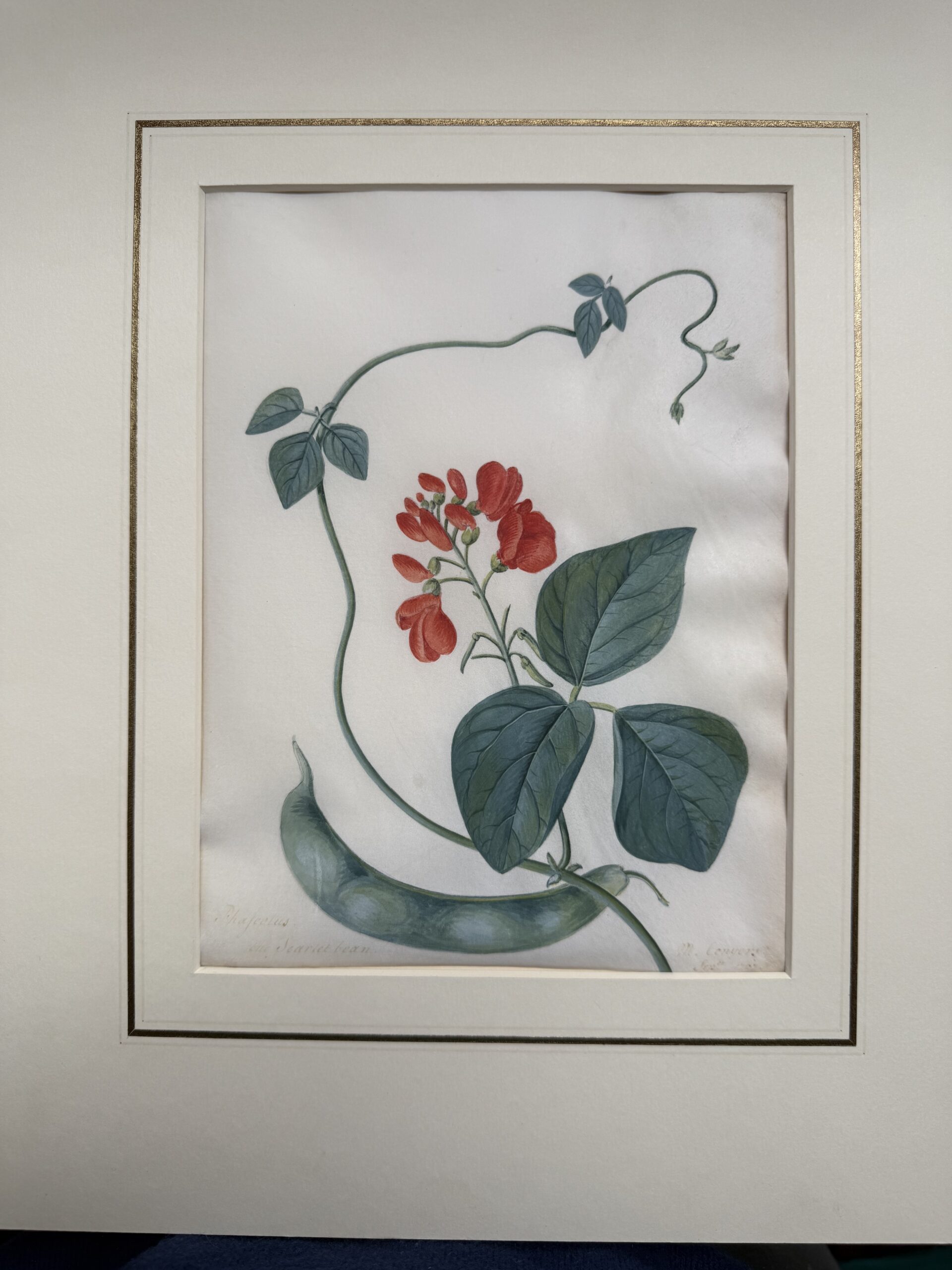
Botanical Watercolour on Vellum by MATILDA CONYERS (1697 – 1793) ~ Signed and Dated, 1767
This item may be reserved for 5 days. We will be in touch to see whether you would like additional information and images.
9Rare payment details will be provided once your reserved item has been confirmed as a purchase.
Description
Matilda CONYERS (1697 – 1793)
Three 18th century female generations of the Conyers family were highly accomplished botanical painters. Firstly there was Matilda Fermor (c.1697-1793) daughter of Lord Lempster who married Edward Conyers in about 1715. Secondly there was Henrietta Fermor (1727-1793) who was not only Matilda’s neice but married her son John Conyers (1717-1775). Matilda Conyers II (1753-1803) a daughter of Henrietta and John and grandaughter of Matilda I, was also known for her botanical watercolours. Thirdly, was Sophia Conyers (daughter of Matilda and sister-in-law of Henrietta) who married Sir Roger Newdigate (1719-1806), Grand Tourist and founder of the Newdigate Prize.
Our signed and dated depiction of ‘Phaseolus, the Scarlet Bean”, is a beautifully composed botanical illustration by the first and rarest of the three Conyers painters (c.1697-1793). Watercolor and opaque watercolor over traces of graphite with brown ink with inscriptions is on vellum – “a medium particularly favored by botanical artists for its smooth and even texture: a surface which allowed for the details of plants, flowers and foliage to be accurately depicted”.
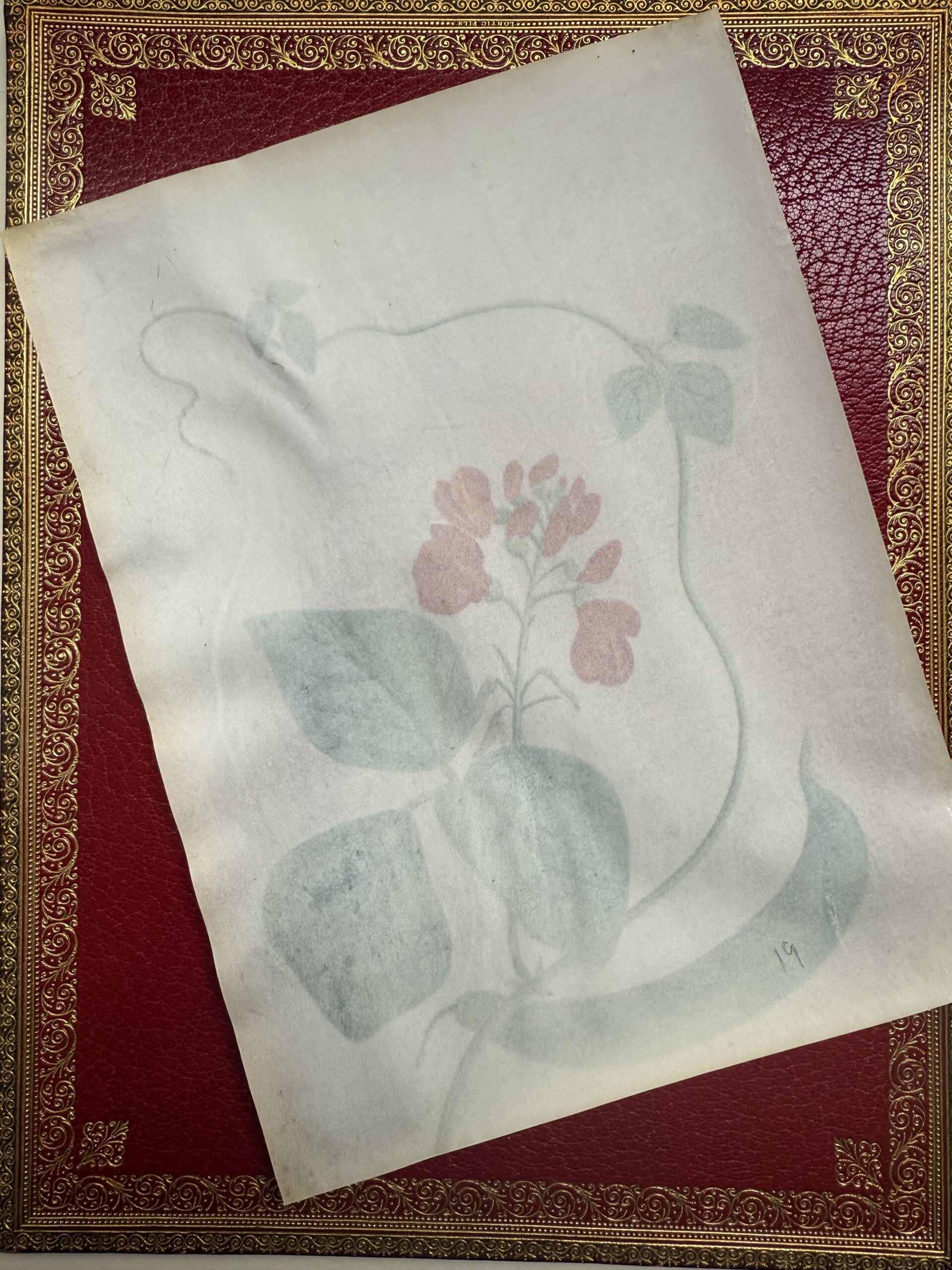
The vellum is a little buckled along the edge. Otherwise in fine, fresh condition – the vellum white and bright with a translucent quality, with the colors especially strong and vibrant.
The Conyers artists lived at Copped Hall in Essex where there were splendid gardens. Certainly the Conyers’ owned works by the most famous botanical artist of the time, Georg Dionsyius Ehret (1708-1770) and it is very likely that these ladies took lessons from him. The greatest botanical artist of the period was Georg Dionysius Ehret (1708-1770) who specialized in the instruction of pupils from English upper class families. Until recently their work apparently remained unknown outside her family circle.
A rare opportunity to acquire a work of the great skill and charm by a virtually unrecorded 18th-century botanical female artist.
Flower painting was considered an appropriate pastime for aristocratic women in the eighteenth century. Members of the Conyers family, which included a number of women who were accomplished botanical artists, may have taken lessons from Georg Ehret, whose work is on view nearby. This drawing reveals an understanding of the Linnaean system of classification, showing all parts of the flower to aid in identification. Conyers records the wallflower with open petals and in bud form. Her skill in describing plants is revealed in the delicate rendering of the tulip’s variegated petals, one of which curls upward slightly as it falls away from the rest of the flower
– Description of the three Botanical works by Matilda Conyers in the The Huntington Library, Art Museum, and Botanical Gardens. These were included in the exhibition: “In Pursuit of Flora: 18th-Century Botanical Drawings from the Huntington’s Art Collections”. The Huntington is the only museum in the US where we could locate Botanical illustrations by the first Mathilda Conyers. Interestingly, the Huntington’s watercolors were created in the very same year of 1767, and are part of the same series and with the same dimensions (9 x 6 1/4 in) as our work.
See K. Sloan, ‘A Noble Art’, BM exh. cat., 2000, no. 166 (text below):
….Most commonly in the eighteenth century, the women of the family painted their own in watercolour, carefully labelling the plants by the Linnean system and showing leaf, stem, petals, flowers and their parts, with seeds. Similar albums to Lady Aylesford’s were produced by several generations of Conyers women at Copt Hall in Essex. Most of Matilda Conyers’ (1753-1803) watercolours were painted on vellum, and the album containing watercolours by an older Matilda (d. 1793) and Henrietta (1727-93) included drawings by Ehret who clearly influenced their work, if they did not actually receive lessons from him.
Literature: Matilda and Henrietta Conyers at Abbott and Holder, June 1996 ( from whom this work was acquired in 1996)
Thomas Williams Fine Art, A Georgian Garden: Botanical Studies …by Matilda Conyers (d. 1803), exh. and sale, N.Y., 1997;John Ingamells, Dictionary of British and Irish Travellers to Italy, pp. 704-5.